
Digital Marketing Strategy 2026: AI Era, Social Commerce, and Zero Click
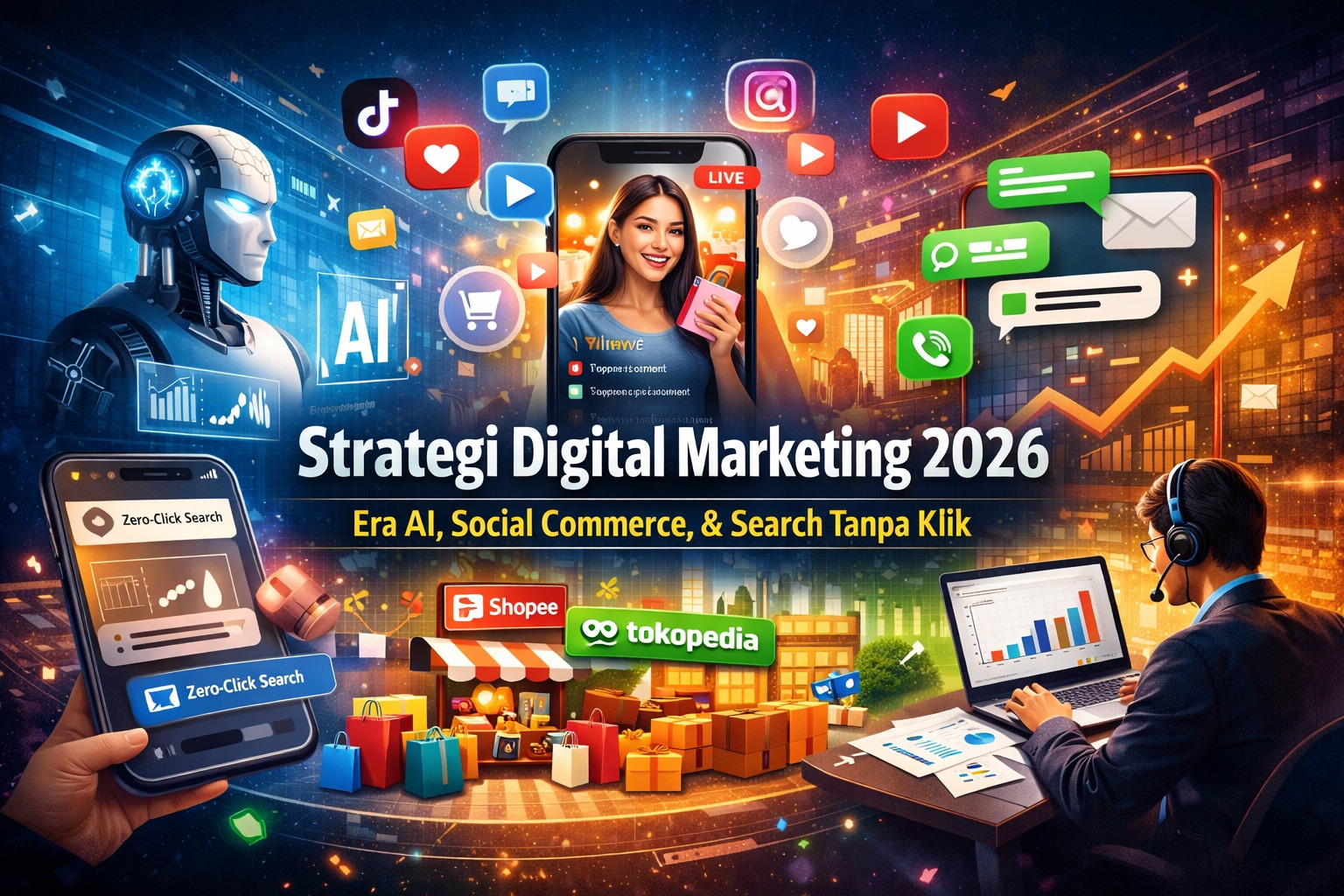
As we enter 2026, businesses are starting to recognize that many traditional digital marketing strategies no longer produce the same results. Advertising costs are rising, web traffic does not always translate to sales, and search engine visibility is increasingly unpredictable. These shifts are driven by the rise of AI-powered search, zero-click results, and a migration in consumer behavior toward social commerce and closed-platform ecosystems.
At the same time, purchase decisions are now more influenced by algorithmic recommendations and video-based content than traditional search listings.
This guide offers a complete overview of 2026’s digital marketing strategies, backed by recent data and real changes in the digital ecosystem. You’ll learn how AI is redefining brand discovery, how social commerce is shaping new purchase journeys, and how to develop agile, measurable, and contextually relevant strategies for the era of zero-click search.
Key Trends in Digital Marketing (2025–2026)
The marketing battleground is no longer about traffic volume or ad impressions. Today, visibility, trust, and contextual relevance matter more. The most resilient businesses are those that evolve alongside AI systems, consumer behaviors, and the increasing dominance of closed and integrated platforms.
1. AI Domination and Automation as the Default
AI has moved from being a tool to being the core engine of marketing decisions. Platforms like Google and Meta now emphasize full automation — from bidding, audience targeting, to creative optimization. Competitive advantage now stems from feeding the right data signals into AI systems — not manual tweaks.
2. The Shift from Click-Based to Answer-Based Search
Search behavior is structurally shifting. Users are increasingly receiving instant answers via AI overviews, chatbots, and voice assistants — bypassing websites altogether. This devalues raw traffic while amplifying the need for entity-level visibility. SEO is evolving from keyword-centric to entity-first and answer-oriented optimization.
3. Rise of Social Commerce and Video-First Journeys
Social platforms have matured into full-funnel ecosystems from discovery, evaluation, to conversion. Short-form videos, live shopping, and creator content drive both impulse and planned purchases. The traditional funnel dissolves here; awareness and conversion now coexist. Brands that fail to integrate with content-commerce-creator ecosystems risk losing relevance at the top of the funnel.
4. First-Party Data as Strategic Infrastructure
With the end of third-party cookies and heightened privacy regulations, first-party data has become foundational. Brands must develop consent-based data collection systems through CRM, loyalty programs, and direct channels like email and WhatsApp.
5. Conversational Funnels Replacing Conventional Landing Pages
Especially in high-ticket B2B and complex purchases, conversions are shifting from websites to direct chats. WhatsApp now functions as a CRM, sales channel, and retention engine. AI chatbots and automated messaging workflows are scaling engagement without losing personalization.
6. Creators and Communities as the New Trust Infrastructure
Trust has shifted from brands to creators, micro-influencers, and communities. Long-term collaborations, co-created content, and affiliate ecosystems outperform traditional one-way endorsements. Brands that cultivate active communities gain resilience against algorithm changes and rising ad costs.
7. Omnichannel Is No Longer Optional, It’s Mandatory!
Consumers fluidly jump between platforms: from TikTok to Google, Instagram to WhatsApp, or marketplaces to YouTube. The challenge isn’t choosing the right channel, but ensuring consistent messaging, data flow, and experience across all touchpoints.
Strategy Execution in 2026: From Manual to Orchestrated
In 2026, AI doesn’t just optimize campaigns, it executes them. Platforms like Google and Meta automate everything from audience targeting to creative assembly.
As a result, strategists are no longer daily operators, but system designers. The marketer’s role becomes ensuring that the AI is aligned with business objectives and fueled by high-quality, first-party data: customer records, transaction histories, behavioral signals.
“Your strategy is only as strong as the data you feed into the AI.”
However, automation isn’t “set and forget.” Without strategic oversight, AI can reinforce outdated patterns, target the wrong audience, or amplify bias. The most effective systems use human-in-the-loop models, where marketers periodically evaluate and recalibrate.
Creators as Long-Term Trust Partners
In 2026, creators are no longer “channels”, they are trust infrastructure. Consumers trust ongoing voices more than ads. Personal stories, lived experiences, and social validation outperform brand claims.
Creators act as bridges between algorithms and human trust.
High-performing campaigns now stem from long-term creator partnerships, where creators shape product narratives, provide feedback, and become embedded in brand storytelling. This fuels the growth of affiliate-based ecosystems with micro-creators acting as distributed sales teams.
Understanding Indonesia’s 2025–2026 Consumer Behavior
Indonesia’s market has evolved into a space that’s fast, visual, emotionally driven, and grounded in social trust.
1. Treatonomics: Emotional Economics in Practice
Under inflation and uncertainty, consumers still spend but on “little treats” that offer instant emotional satisfaction. This trend reflects:
-
Economic pressure making long-term goals feel distant
-
Purchases becoming tools for emotional control and self-reward
It’s not impulse, it’s a rational emotional strategy.
2. Mobile-Absolute Reality & Platform Saturation
Connectivity has peaked. Internet access is no longer a differentiator, attention is! The challenge is no longer reach, but relevance and immediate resonance.
3. Demographic Dividend & the Halal Economy
With a median age in the early 30s, Indonesia’s population is digitally native, highly adaptive, and demanding. They value:
-
Creator opinions over brand ads
-
Relevance, transparency, and personalization
-
Brands aligned with values and lifestyle
Halal is now a mainstream trust signal not a niche. Brands that succeed embed halal into broader narratives like clean beauty and ethical living, rather than treating it as a checklist.
Performance Marketing in 2026: From Leads to Outcomes
Success is no longer measured by clicks, impressions, or leads, but by:
-
Revenue
-
Profitability
-
Customer Lifetime Value
Surface metrics are being abandoned. Performance now means strategic precision and sustainable impact.
Omnichannel Strategy = Experience Synchronization
Omnichannel in 2026 means a unified journey, not just presence across platforms. Consumers switch platforms rapidly but expect one cohesive narrative.
Multichannel ≠ Integrated.
Integration = Consistency in data, experience, and value proposition.
The Super-App Ecosystem = The New Internet
Indonesian users no longer browse the “web” as they live inside super apps. Platforms like TikTok, WhatsApp, Shopee, and Instagram are now the gateway to all digital activity.
-
Google: From traffic engine to validation & demand capture
-
Meta: From engagement to nurturing & retention
-
TikTok: Primary channel for discovery and social proof
-
Marketplace (Shopee, Tokopedia): Conversion with high buying intent
-
WhatsApp: Core funnel for chat-based conversion & CRM
-
Email & Owned Channels: Long-term stability & algorithm insulation
Digital Agencies in 2026: From Executors to Growth Architects
Agencies are no longer hired for traffic, but for growth system design. Clients need partners who:
- Understand media, data, funnels, and revenue
- Architect cross-channel, AI-powered growth systems
- Rapidly adapt to algorithms and market shifts
Strategic partnerships is more than just One-off campaigns
Frequently Asked Questions on Digital Marketing Strategy in 2026
How should businesses adapt to the dominance of super-apps like TikTok, WhatsApp, and marketplaces?
Stop treating websites as the center of the journey. Each platform serves a distinct function: discovery, trust, or conversion. Orchestrate native content for discovery, build trust in verification channels, and close conversions via chat or marketplaces.
What’s the biggest mistake businesses make in 2026 digital strategies?
Applying outdated tactics in a transformed ecosystem. Many still chase vanity metrics like low CPA or traffic without aligning with platform context or business outcomes.
Doxadigital and Your Next Digital Marketing Strategy
Doxadigital exists to serve brands that understand that modern digital marketing is not about hacks but it’s about systems, data, trust, and strategy. With integrated expertise across SEO, performance marketing, content, and AI-driven visibility, we help businesses confidently navigate the evolving digital landscape.
📞 Contact Doxadigital at +62 812-8888-3692
📧 Email: [email protected]

Viktor Iwan adalah CEO dan pendiri Doxadigital Creative Digital Agency. Dia juga merupakan pembicara dan pelatih publik dalam berbagai acara pemasaran digital seperti “Social Media Week”, “Tech in Asia”, “WordCamp”, “SEOCon”, “QuBisa Bootcamp”, dan “Google Agency Bootcamp”. Viktor Iwan memiliki sertifikasi Google Ads, Facebook Lead Trainer, Facebook Media Buying and Planning, dan Google Analytics. Dia juga menjadi salah satu dari 5 Product Expert Google Ads asal Indonesia oleh Google Inc.
Viktor Iwan juga memiliki website pribadi di viktoriwan.com.
Latest Articles


